
Disclaimer
The content provided is intended solely as a general example for strategic planning purposes related to agricultural enterprises. It does not constitute legal or financial advice and should not be relied upon as a substitute for consulting qualified professionals in those fields. Regulations and standards may vary depending on location, and adjustments may be necessary to ensure compliance. The use of this example is the user’s responsibility, and no liability is assumed for any errors, omissions, or consequences arising from its use without expert consultation.
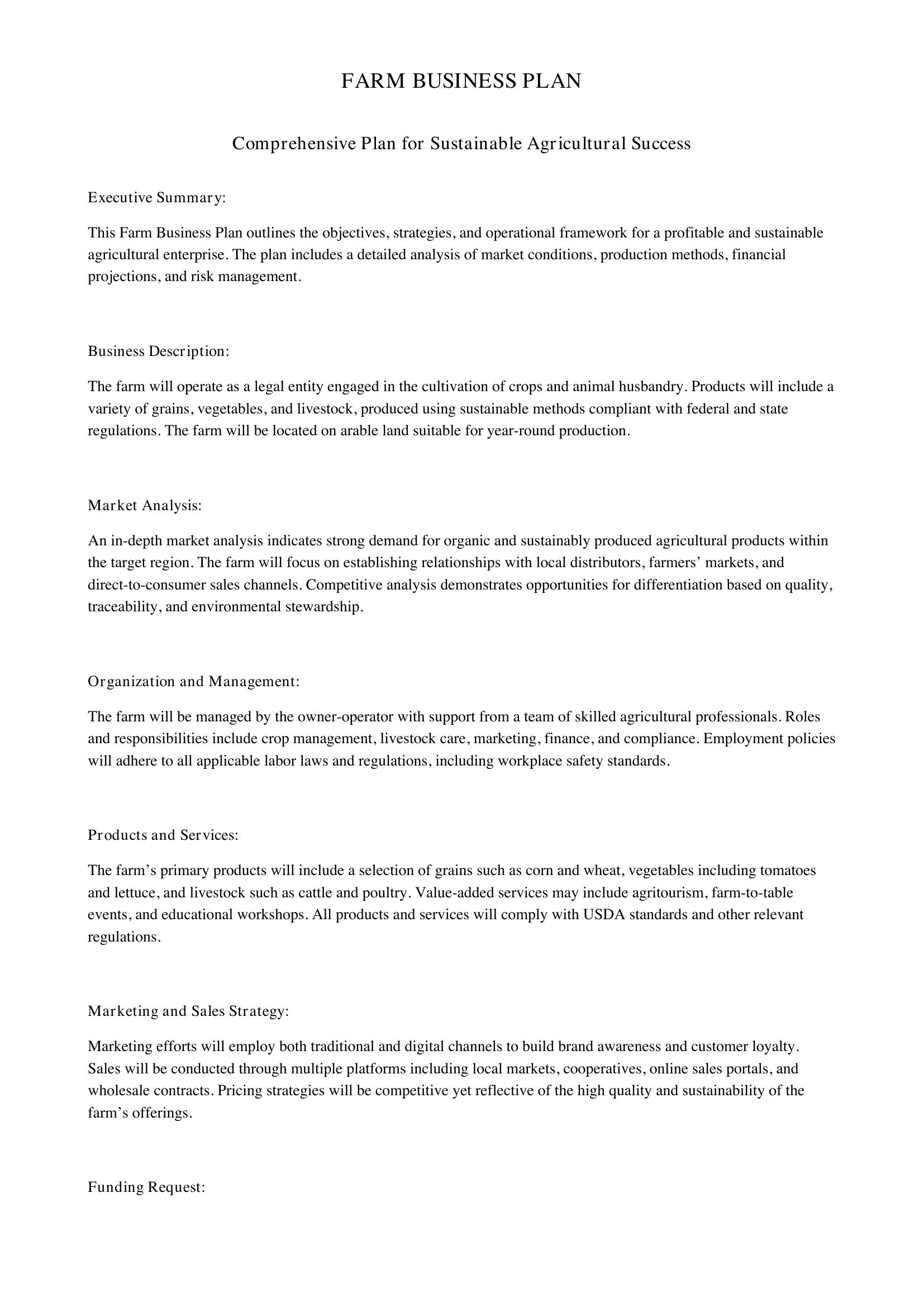
This sample farm business plan template may vary depending on specific circumstances and requirements. Adjust details accordingly for your particular farm project.
Farm Business Plan Template (Sample)
Parties:
Farmer: Alice Green
Farm Name: Green Acres Farm
Address: 789 Farm Road, Springfield, IL 62704
Farm Description:
Green Acres Farm specializes in organic vegetable production, utilizing sustainable farming practices on a 50-acre parcel located at 789 Farm Road, Springfield, IL 62704. The farm includes crop fields, a barn, storage facilities, and access to water resources.
Business Objectives:
To produce and sell organic vegetables to local markets and restaurants, increase crop yields annually, and expand marketing efforts to develop a loyal customer base over the next five years.
Financial Plan:
Initial capital investment is estimated at $150,000, covering equipment, seeds, and operational costs. Expected revenue streams include direct farm sales, farmers markets, and CSA programs. The plan forecasts break-even within the first two years with a steady increase in profit margins.
Marketing Strategy:
Utilize social media platforms, participate in local farmers markets, and develop a CSA membership program to build a customer base and promote farm products. Emphasize organic and sustainable practices to appeal to health-conscious consumers.
Risks and Challenges:
Weather variability, pest management, and market fluctuations pose potential risks. Strategies include crop diversification, crop insurance, and establishing strong buyer relationships to mitigate these risks.
Additional Notes:
- Ensure compliance with local farming regulations and organic certification standards.
- Plan for sustainable water and waste management to minimize environmental impact.
- Seek partnerships with local community organizations for marketing and educational activities.
Springfield, ______________________
Alice Green
Farmer